Skip to main content
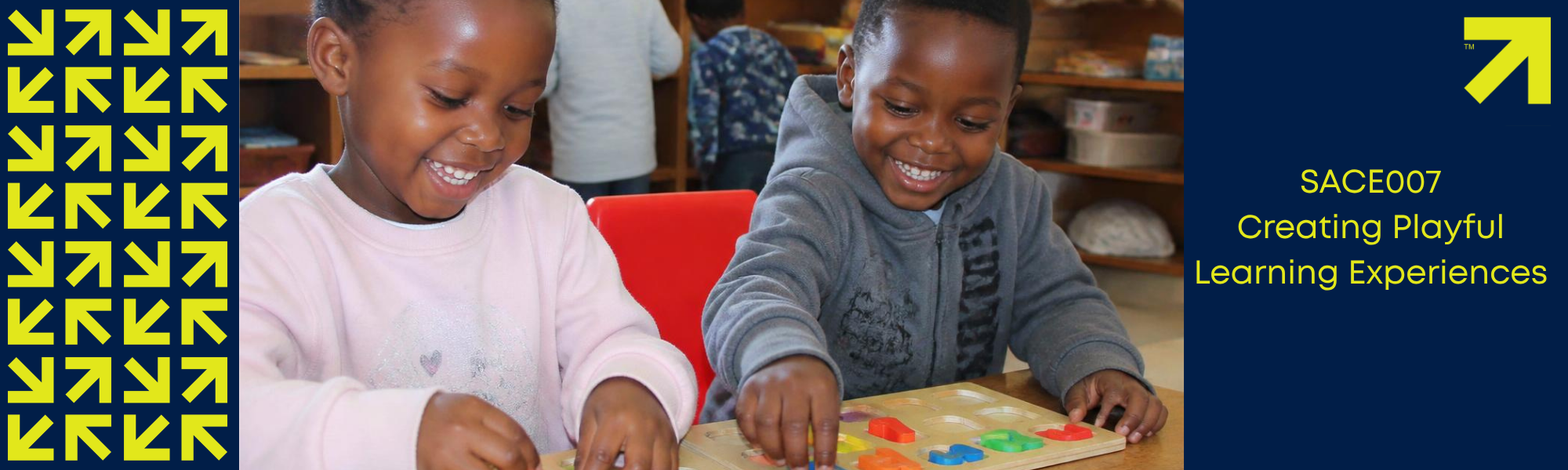
SACE 7: Creating Playful Learning Experiences
0%
Previous
Course data
General
Announcements
In Preparation
Welcome to SACE Module 7: Creating Playful Learning Experiences
Download: SACE Module 7 - Creating Playful Learning Experiences
Introduction
Interactive Activity 1: Driving Question 1
Quick reflection: Why PBL is Important in Playful Learning?
Welcome to Creating Playful Learning Experiences
What are the aims of this course?
What do we mean by...?
Glossary: Study Aid (Download)
Interactive Activity 2: Match the definitions
Interactive Activity 2: Match the definitions
What is playful learning?
Part 1
Part 1: Play Pedagogy as the Foundation for Creating Playful Learning Experiences
Play pedagogy and constructivist approach
Why play is important for learning and development?
What is the continuum of playful learning?
Progress Check: Part 1
Take a moment to make sure that you are on track for assessment (Part 1)
Part 2
Part 2: A Systems Approach to Making Play a Core Aspect of ECD
Understanding the concept of Active Outdoor Play
Curriculum development and implementation
Progress Check: Part 2
Take a moment to make sure that you are on track for assessment (Part 2)
Part 3
Part 3: The Role of Families and Communities in Play-Based Learning
Download: Play-based learning activities for ECD programmes and preschools
The role of families and communities
Interactive Activity 3: Strategies for Engaging Families and Communities
Progress Check: Part 3
Take a moment to make sure that you are on track for assessment (Part 3)
Part 4
Part 4: Environments and Resources that Enable Playful Learning Experiences
Why the physical environment is necessary for learning and play?
What are Learning Centres or Learning Areas?
ECD environments for different ages and stages: Beginning (Birth to 18 Months)
ECD environments for different ages and stages: Moving on ( 18 to 36 Months)
ECD environments for different ages and stages: Advancing Further ( 3 to 4 Years)
ECD environments for different ages and stages: Towards Grade R (Aged 5)
Materials and resources to enable playful learning experiences
A play based roster for the outside environment
Progress Check: Part 4
Take a moment to make sure that you are on track for assessment (Part 4)
Part 5
Part 5: Considerations When Planning Playful Learning Activities and Experiences
Developmentally appropriate playful activities
Developmental characteristics of playful learning
Interactive Activity 4: Planning Playful Learning Experiences
Progress Check: Part 5
Take a moment to make sure that you are on track for assessment (Part 5)
Conclusion
How do ECD practitioners observe, record, and provide feedback on children's development to support optimal learning and growth?
Portfolio Assignments Summary
What you learned in this module?
Upload: Portfolio Assignment
Next
Side panel
Categories
All categories
Early Childhood Development
Early Childhood Development.../NVC 04 Early Childhood Deve...
Early Childhood Development
Early Childhood Development.../Project Based Learning - 20...
New Venture Creation
Home
Log in
Username
Username
Password
Password
Forgot your password?
Log in
Categories
Collapse
Expand
All categories
Early Childhood Development
Early Childhood Development.../NVC 04 Early Childhood Deve...
Early Childhood Development
Early Childhood Development.../Project Based Learning - 20...
New Venture Creation
Home
Course info
SACE 7: Creating Playful Learning Experiences
Skill Level
:
Beginner